Where Is a Dilution Calculator Used in Chemistry, Biology, Pharmacy, and Laboratory Work?
Discover where dilution calculators are used in chemistry, biology, pharmacy, molecular biology, microbiology, and everyday laboratory workflows.
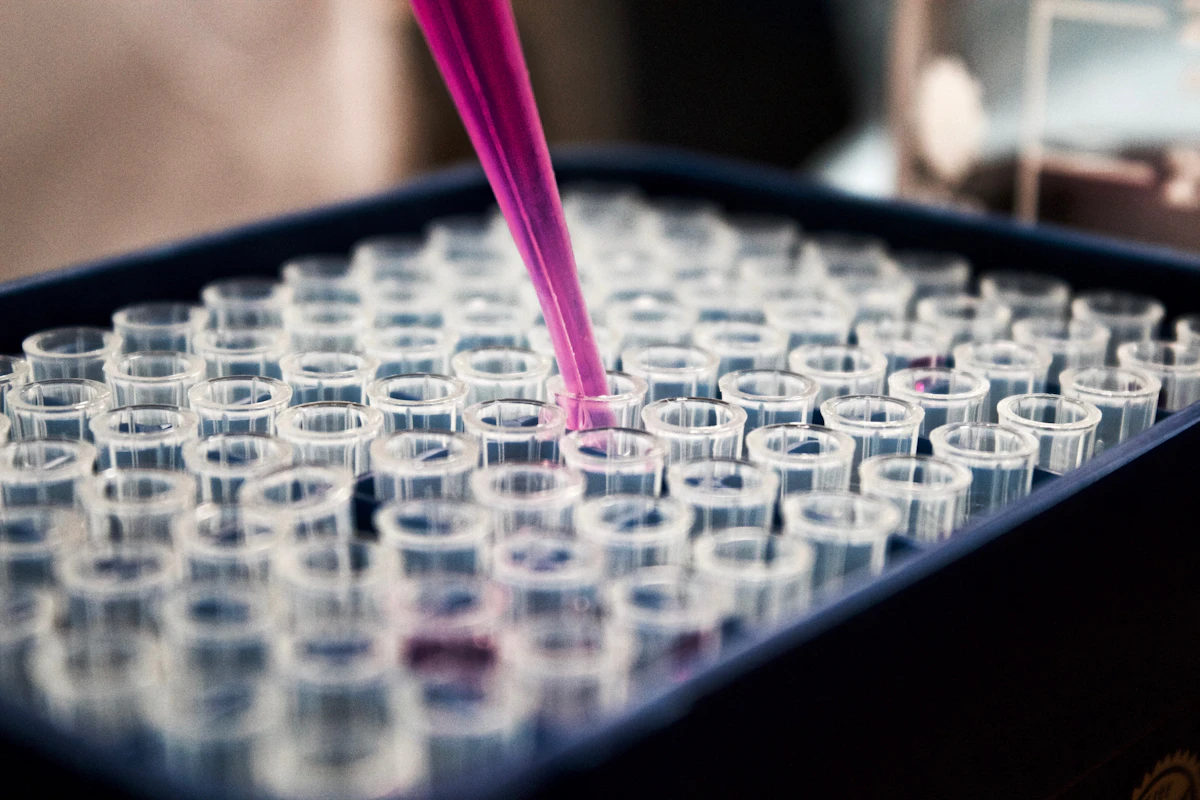
Walk into almost any science lab and you will see someone diluting something. A student prepares a weaker acid. A technician makes a working reagent. A pharmacist adjusts a drug concentration. All of them rely on the same basic idea, and many of them use a dilution calculator to save time and prevent mistakes. This guide explores where these calculators appear in daily practice. You will see uses in chemistry, biology, pharmacy, molecular biology and microbiology, along with the reasons why accuracy matters so much.
Dilution Calculations in Chemistry Experiments
Chemistry labs use chemical dilution in nearly every experiment. Students dilute strong acids and bases to safe working strengths. Analysts prepare standard solutions from concentrated stock. Titrations, spectroscopy and chromatography all depend on solutions of known concentration.
The C1V1 C2V2 rule sits behind most of these tasks. A student may need 250 mL of 0.1 M hydrochloric acid from a concentrated bottle. The calculator finds the stock volume, and the student adds acid slowly into water, never the reverse, for safety. Chemistry also uses dilution to bring a sample into the range of an instrument. A reading that is too high can be fixed by a known dilution factor and then corrected back mathematically.
Preparing Biological Samples and Reagents
Biology labs handle delicate materials, so accurate reagent preparation is essential. Researchers dilute enzymes, antibodies, buffers and growth supplements to exact working levels.
Diluting them by a known factor brings the reading into a reliable zone. A biology dilution calculator helps track these factors across many samples. It also reduces mental load in long sessions, where fatigue can cause simple arithmetic slips. Careful records keep the results traceable and comparable.
How Laboratories Prepare Working Concentrations
Most laboratories store reagents as concentrated stocks and prepare working concentrations on demand. This habit saves shelf space, lowers cost and improves stability, because many chemicals last longer when concentrated or frozen. Each day, the team turns those stocks into ready-to-use solutions.
Documentation from Thermo Fisher gives practical examples involving PCR standards and assay reagents, which shows how routine these calculations are in real workflows. A calculator standardizes the process across staff and shifts. This consistency supports quality systems, audits and reproducibility. A shared laboratory dilution routine also makes training new members faster and safer.
Dilutions Used in Pharmaceutical Formulations
Pharmacy and pharmaceutical science place a very high value on dilution accuracy. Drug products are made by mixing active ingredients with carriers, solvents or excipients at precise levels. Compounding pharmacists prepare custom strengths for patients who need doses that manufacturers do not supply.
Here, an error is not just a failed experiment. It can affect patient safety. A pharmaceutical dilution may involve intravenous solutions, pediatric doses or topical preparations with strict percent strengths. Calculators support the process by reducing manual arithmetic, but professionals still verify each result independently. Double checks, calibrated balances and documented procedures form a safety net. In this field, dilution math and quality control go hand in hand.
Applications in Molecular Biology and PCR Workflows
Molecular biology uses dilution constantly. PCR dilution is a familiar example. Scientists dilute DNA templates to fit the working range of a reaction. They dilute primers from concentrated stock to a final reaction concentration. They also dilute master mix components so that every tube receives the same amount.
Sample readings are then compared against that curve. Because the curve depends on each dilution being accurate, a small pipetting error at the start can distort the whole experiment. A DNA dilution calculator helps plan each step, and it makes sure that the final reaction contains the right concentration of each ingredient.
Serial Dilutions in Microbiology and Cell-Based Experiments
Microbiology relies on serial dilution to count living organisms. A bacterial culture may hold millions or billions of cells per milliliter. To count colonies on a plate, technicians dilute the sample in tenfold steps until a countable number remains.
Cell culture work uses similar ideas. Scientists dilute drugs in a series to test how cells respond across a range of doses. They also dilute cell suspensions to seed plates at the right density. A microbiology dilution calculator helps track factors from tube to tube and reduces confusion when many samples are handled at once. Careful labeling and fresh pipette tips keep each step clean.
Preparing Standards for Laboratory Measurements
Many measurements need calibration standards. Analysts prepare a set of solutions with known concentrations and measure their signals. They then plot signal against concentration to build a curve. Unknown samples are read against that curve.
The quality of the standards controls the quality of the results. Serial dilutions make it easy to prepare evenly spaced concentrations from one carefully weighed stock. The table below shows a simple example of how a set of standards may be organized for an assay.
Standard
Dilution Step
Relative Concentration
S1
Stock
100 percent
S2
1:2 from S1
50 percent
S3
1:2 from S2
25 percent
S4
1:2 from S3
12.5 percent
S5
1:2 from S4
6.25 percent
Using a calculator to plan the volumes ensures that every standard has enough liquid for replicate measurements.
Why Accurate Dilution Matters for Experimental Results
Dilution sits at the start of many procedures, so its errors travel far. A concentration that is off by twenty percent may shift a dose response curve, change an enzyme rate or alter a cell count. Later analysis cannot fix a mistake that was built into the sample.
Accuracy also affects cost and safety. Wasted reagents are expensive, and repeated experiments waste time. In pharmacy and clinical settings, a wrong dilution can harm people. Reproducibility matters too. Other scientists must be able to follow your method and get the same result. Clear calculations, documented factors and calibrated tools all support that goal. In short, dilution accuracy underpins trust in the data.
How Digital Dilution Calculators Support Laboratory Work
A dilution calculator online offers speed and convenience. You type in stock concentration, target concentration and final volume, and you receive the stock and diluent volumes at once. Many tools convert units automatically, which removes a large source of error. Some support serial dilution planning and show every tube in a table.
They also help with teaching. Students can compare hand calculations with the tool and learn from differences. Busy technicians can process many requests without repeating the same arithmetic. Still, treat any tool as an assistant and not an authority. Verify the inputs, check that the results are reasonable and follow your laboratory’s approved procedures. The best scientific dilution tool is one you understand well enough to question.
Conclusion
Biologists use them for reagents and samples. Pharmacists use them for precise drug strengths. Molecular biologists rely on them for PCR, and microbiologists depend on them for serial counts. In every field, the goal is the same: a correct concentration that supports trustworthy results. Learn the logic behind C1V1 C2V2, use a reliable calculator and always verify your answer. That combination makes every laboratory dilution faster, safer and more accurate.